Product case study
PURE Entertainment
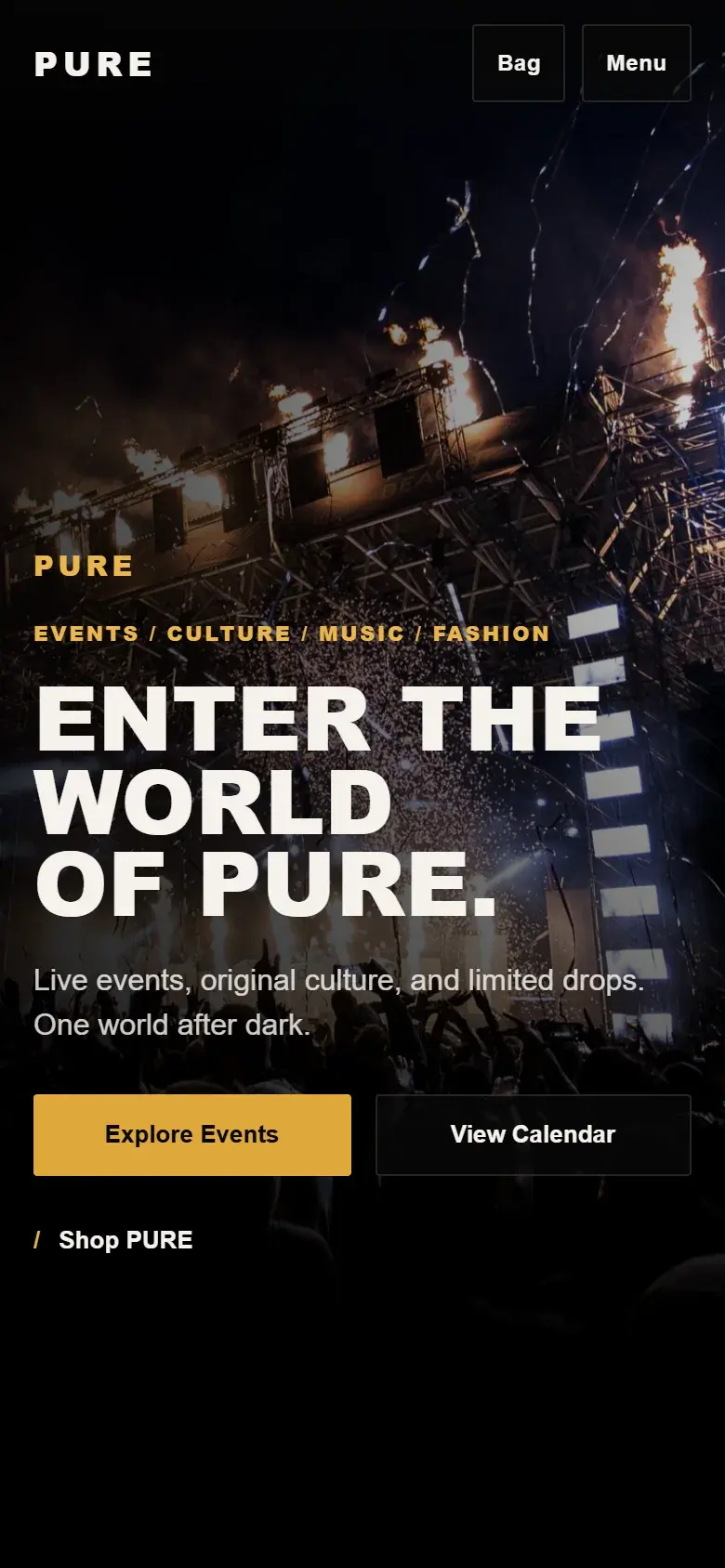
An entertainment brand website with event discovery, a photographic collection preview, saved pieces, and original editorial content.
Explore the case study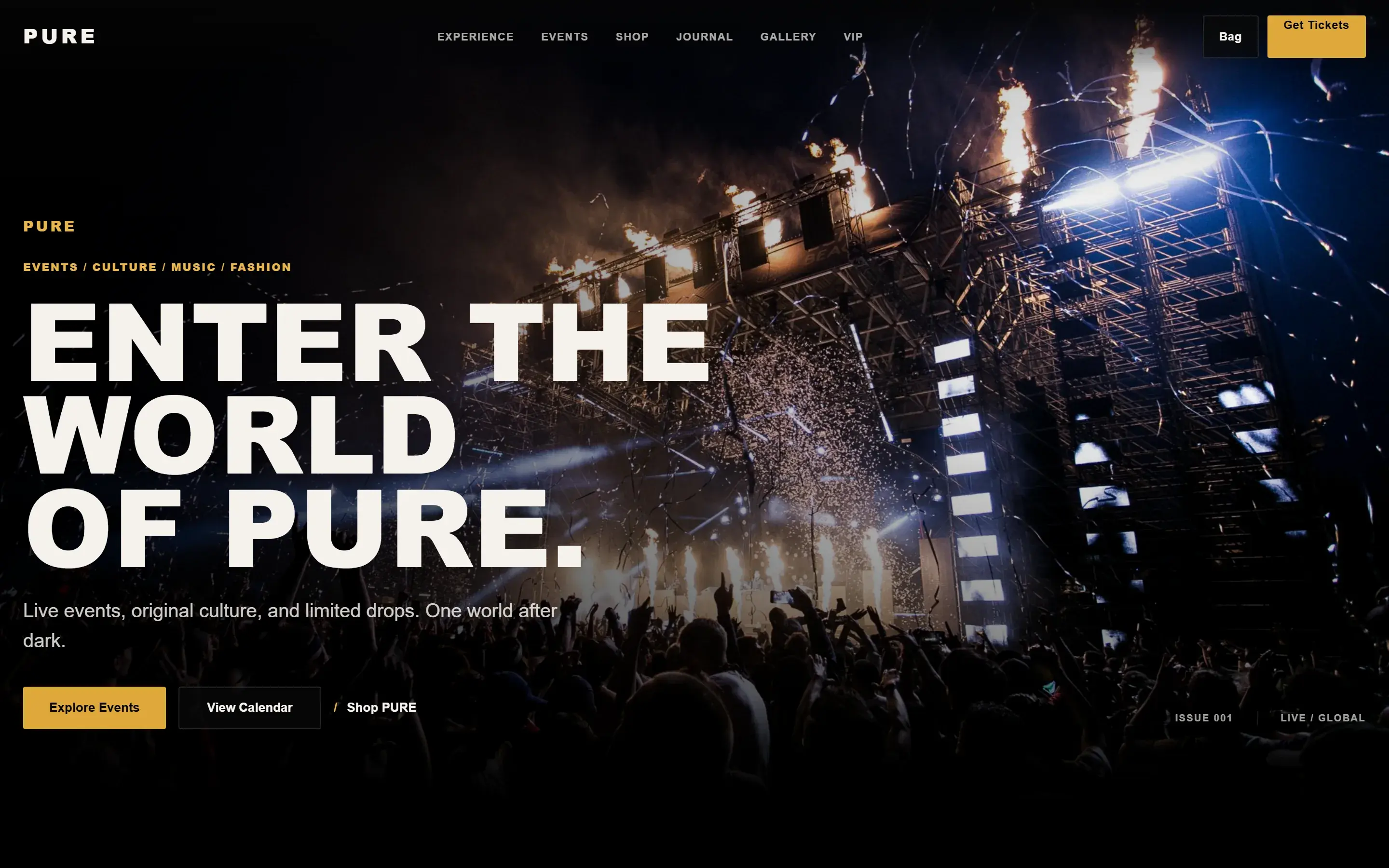
- Role
- Website design refinement and frontend and backend implementation.
- Stack
- JavaScript, Node.js, Responsive design, Server validation
A closer look
The problem
The entertainment website needed more than a striking homepage. Visitors needed useful routes into events, products, editorial stories and contact, with clear states for features that were not ready for live sales.
The objective
Preserve the established PURE identity while making the wider website readable, accessible and useful across desktop and mobile.
Research
I reviewed the existing pages and followed the customer journey from event discovery and collection browsing through the bag, order review and inquiry form. That exposed gaps in content, navigation and validation.
Design decisions
Extend the brand across real pages
The near-black, white and warm-gold direction carries through event pages, the collection, product guidance, an About page, four journal articles and searchable FAQs.
Make collection browsing practical
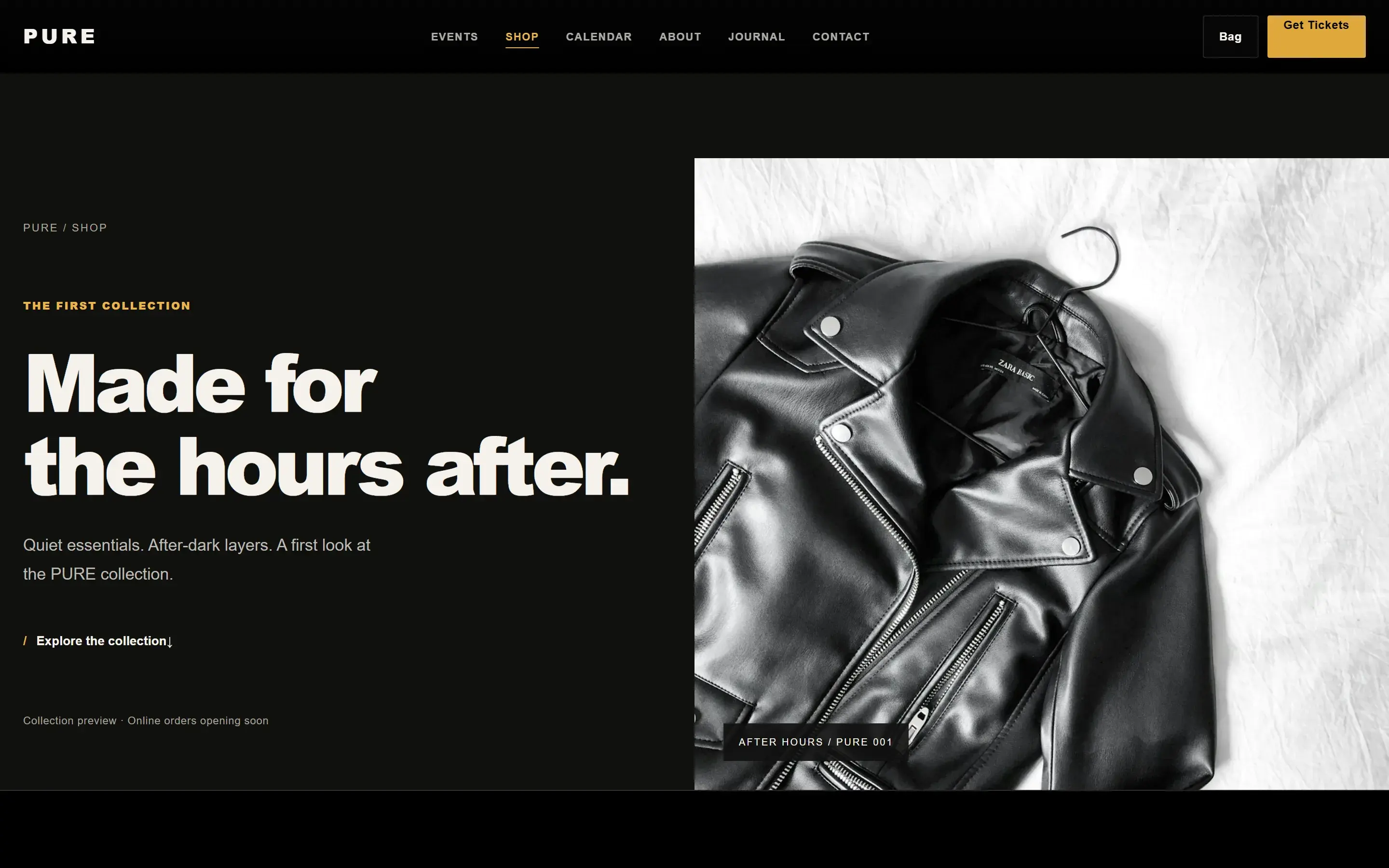
Search, category filters, sorting, saved pieces, explicit size selection and image enlargement help visitors inspect the collection. Stock photographs are labelled as style references.
Engineering decisions
Validate prices on the server
Order quotes use catalogue prices and reject invalid quantities, variants, past events and unopened ticket sales. The bag remains on the current device; no payment is collected.
Keep deployment limits visible
The local Node backend stores inquiries in SQLite. Vercel serves the website and order-quote API, but inquiries return a clear unavailable response until persistent production storage is connected.
Challenges and tradeoffs
The local inquiry backend requires durable storage, while the existing hosting uses serverless functions. The deployed site therefore exposes the working catalogue and validation without pretending that contact submissions or paid orders are being processed.
The website became more useful when every visual destination led to readable content and every unavailable service explained its actual state.
The solution
A responsive brand website with events and an archive, collection and product pages, saved pieces, a persistent bag, order validation, journal articles and customer guidance.
- JavaScript
- Node.js
- Responsive design
- Server validation
Results
The live site can be opened and explored directly. Verification covered 84 responsive page checks, 73 internal links and 13 backend and deployment-adapter tests. Live order validation and private-file protection were checked after deployment.
Lessons learned
A convincing brand experience depends on useful content and dependable interactions. Original product photography, confirmed commercial policies, payments and persistent inquiry storage remain necessary before live commerce.