Product case study
DigiLearn
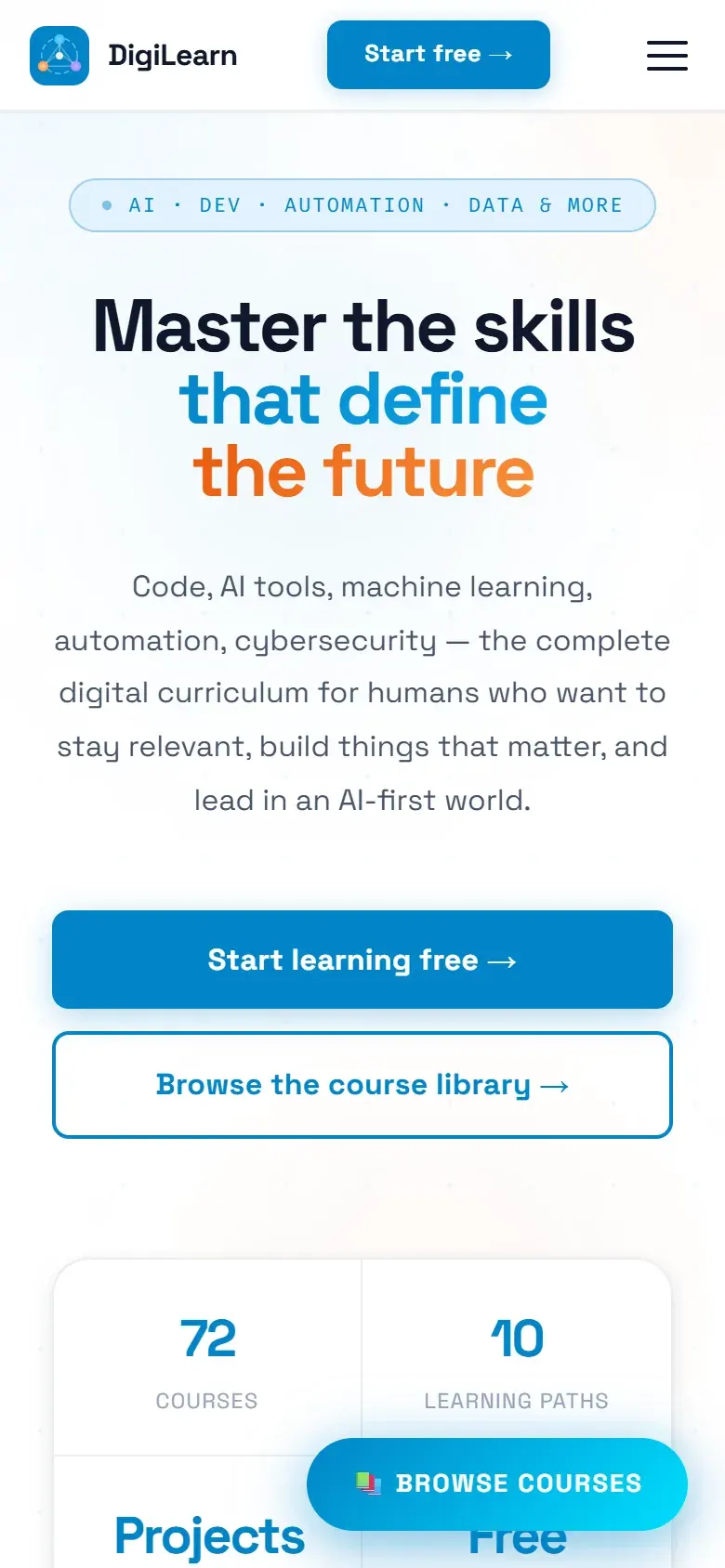
Structured paths through coding, AI, automation, and data science, built around real projects rather than video playlists.
Explore the case study
- Role
- Sole designer and engineer. Learning model, content structure, interface, and build.
- Stack
- Next.js, TypeScript, Learning paths
- Source
- View source on GitHub
A closer look
The problem
Digital learning is easy to start and hard to navigate. Tutorials, videos, and tools accumulate without showing what to learn next or what a learner should be able to make at the end.
The objective
Turn a broad modern development curriculum into clear learning paths, visible project outcomes, and a course library that can be searched without losing the larger direction.
Research
I mapped the capabilities behind practical web, automation, AI, and data work, then grouped them by dependency rather than popularity. The audit exposed two needs: a guided path for direction and an open library for deliberate lookup.
Design decisions
Lead with paths, not volume
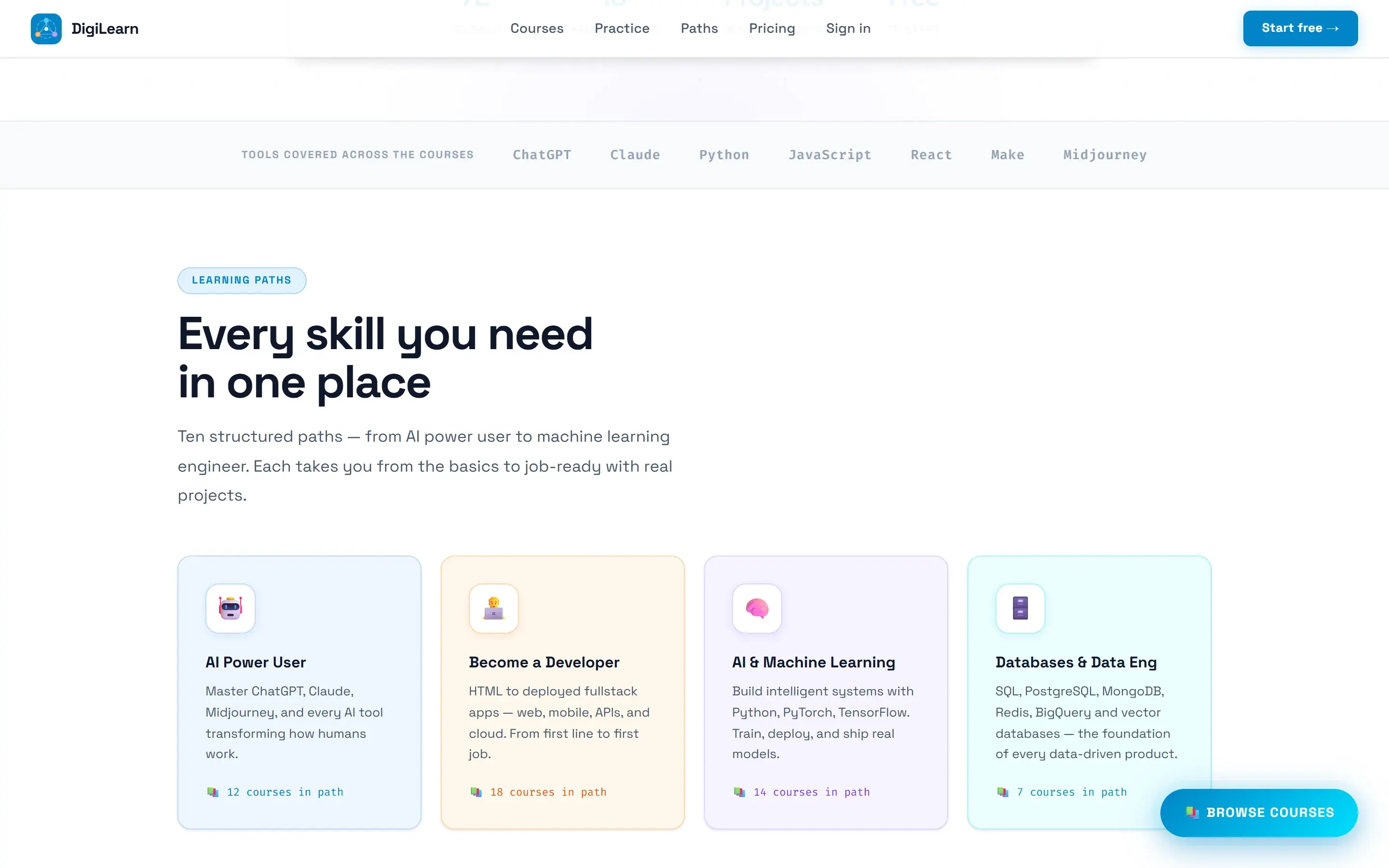
The first choice is a direction with an outcome. Course counts and individual lessons remain visible, but they support the path instead of becoming the product headline.
Make the library useful on its own
Search, topic filters, lesson counts, and access status let someone find a specific course while still understanding where it belongs in the wider programme.
Engineering decisions
Protect saved progress
Local progress is parsed defensively, checked for the expected version and record shape, and reduced to unique lesson identifiers. Invalid data returns to a safe empty state instead of breaking the experience.
Model learning as structured content
Paths, courses, lessons, and outcomes have distinct roles in the data model. That keeps navigation and progress behaviour consistent as the library grows.
Challenges and tradeoffs
Breadth can quickly make a learning platform feel generic. The tradeoff was to show the range of disciplines while keeping each route anchored to a concrete outcome. Local progress also keeps the preview simple, but it does not follow a learner across devices.
The information architecture settled when projects became the destination and lessons became the route. That gave the catalogue a reason to exist beyond its size.
The solution
A responsive digital learning platform with outcome led paths, a searchable course library, lesson level structure, and defensively stored progress in the current browser.
- Next.js
- TypeScript
- Learning paths
Results
The live product exposes its paths and course library for direct inspection. Visitors can browse by topic, review lesson depth and access status, and test the learning structure on desktop or mobile.
Lessons learned
A credible curriculum needs stronger sequencing, not more categories. The next improvement should deepen project assessment and make progress portable only when an account system is ready to support it reliably.