What wiring a panel taught me about architecture
I wrote this after spending three hours retracing a fault in a distribution board that looked exactly like a circular dependency.
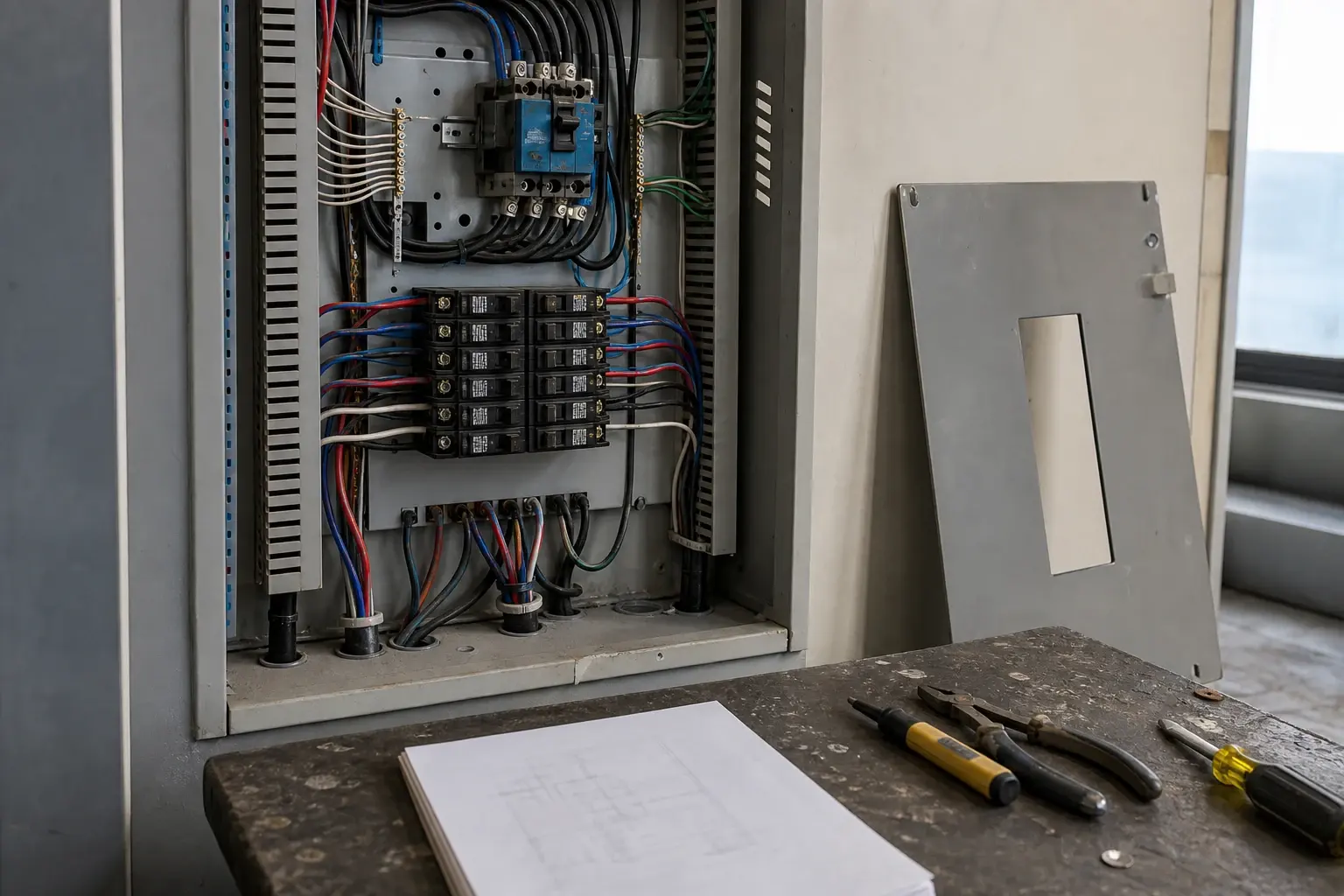
There is a moment you will recognise if you have worked with complex systems of any kind. You stare at something and realise you are not looking at one problem but at a record of every decision ever made about it. A breaker panel does this to me. So does a legacy codebase.
Both are accumulations of intent. The person who wired this panel had reasons. The developer who structured this module had reasons. The question, the same question in both cases, is whether those reasons are still visible, still legible, still right.
In electrical work we call a bad installation a rat's nest: a tangle of wire with no discernible logic, where things work but nobody can tell you why, and nobody is sure what will happen if you change one thing. Software engineers call this technical debt. The name changes. The texture of the frustration does not.
What the trade taught me is this: the quality of an installation is measured not by whether it works on the day it is finished, but by whether someone can understand it, maintain it, and extend it safely later. Every wire labelled. Every circuit protected. Every join accessible.
Good architecture, whether in code, in buildings, or in electrical systems, is an act of communication with the future. You are writing a message to someone you will never meet who will need to trust your work. That shifts how you think about the shortcuts.
When I started coding seriously, I found I already understood separation of concerns. I had just been calling them circuits. I understood fault isolation; I had been calling it a fuse. I understood the difference between a patch and a repair.
The deeper lesson is about respect for the system. A good electrician never assumes. They test. They verify. They document. They leave the installation better than they found it. That is not a skill. That is a disposition, and it is the most transferable thing I own.